How to reverse-engineer any interior with Claude
May 22, 2026
I asked Claude to read a room. Here's what it found.
You've got that reference image. The one you keep coming back to. You love it, but you can't fully break it down. You might guess the sofa, maybe the paint color. But the lighting setup? You have no idea.
Here's something I do most weeks now.
I drop an image into Claude with one prompt, and it analyzes the whole room back to me. Materials, furniture, lighting, architectural details. Every piece gets a brand and designer guess. Every paint gets a closest match by name.
I use Claude Opus 4.7 because it's the sharpest model right now, but the same prompt works in ChatGPT.
So here's a real one. This room is designed by West Haddon Hall, the studio led by Kate Driver.
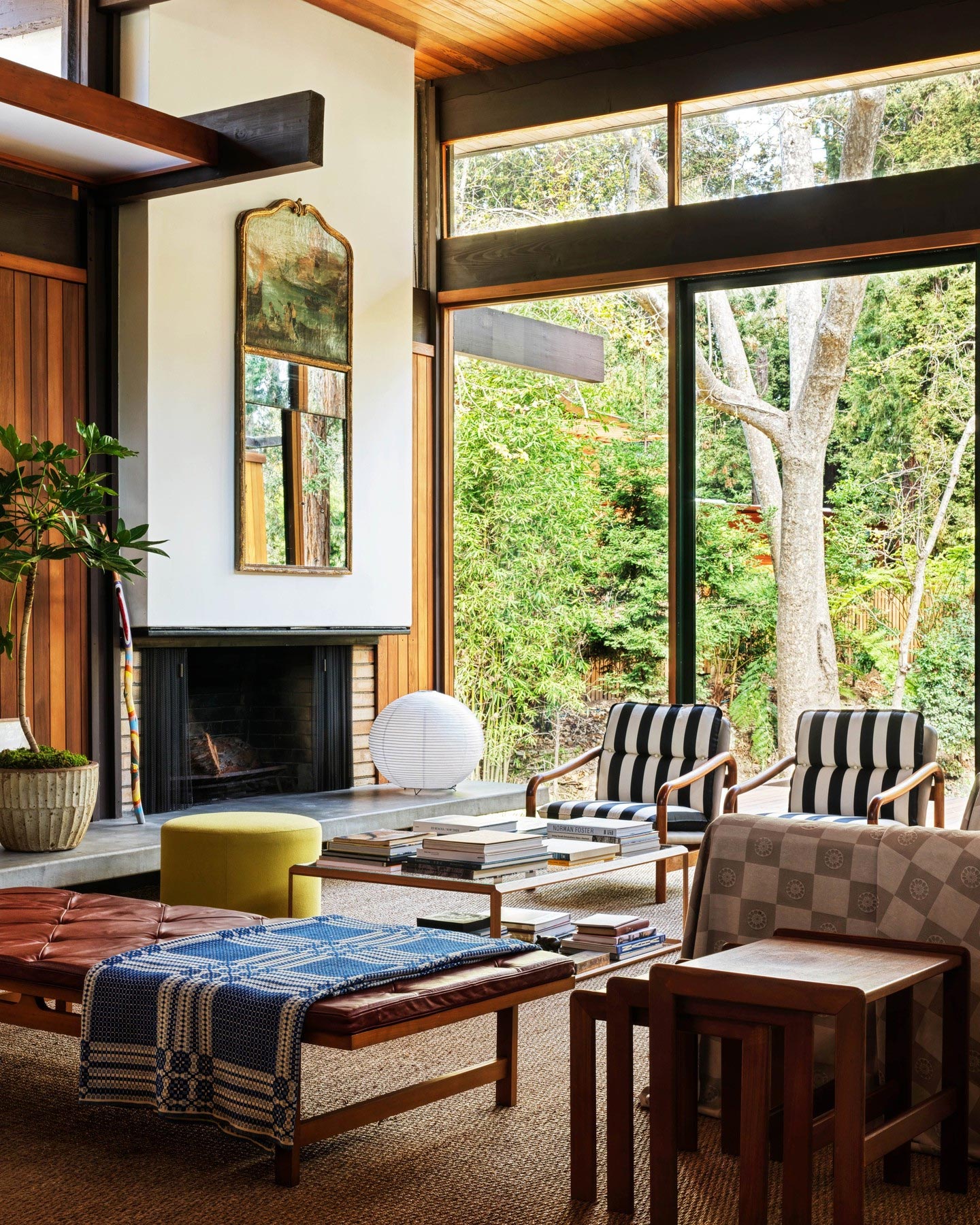
A few things Claude pulled from that single shot (the full breakdown runs too long to paste here ;)
- Ceiling: tongue-and-groove cedar or redwood, satin clear-sealed, warm reddish-amber grain.
- Walls: matte gypsum plaster in a warm off-white, closest to Benjamin Moore White Dove.
- Floor: woven sisal or coir matting in a fine herringbone weave, warm wheat tone, unsealed.
- The tufted leather daybed reads mid-century Scandinavian. Walnut or teak frame, through-tenon joinery, in the vein of Børge Mogensen or a Wegner GE frame. Cognac leather. Roughly 190 x 75 x 40 cm.
- The paper lantern on the hearth is an Isamu Noguchi Akari, the BB3-55XN or close to it. Washi paper, bamboo ribbing, currently made by Vitra (Ozeki originally).
And it keeps going. Every fixture, the fireplace, the full color temperature and lighting setup.
The part I rely on most: it marks every guess with a confidence level (High, Medium, Low) and gives 1 or 2 alternatives when it's unsure. It also flags whatever is obscured or out of frame, so you know what's missing instead of trusting a blind guess.
That confidence flagging is what lets me put it in front of a client. When you need to justify why you specced a particular piece, or you want to break a reference down before pitching a direction to your team, this does the work.
Try it on something from your own reference folder. See how close it gets.
Then the prompt:
You are an expert interior designer, architectural historian, and product specialist with encyclopedic knowledge of materials, furniture provenance, and lighting design. I am going to give you an image of an interior. Your job is to perform a forensic breakdown of the space so that I, as a designer, could reproduce it precisely.
Be technical, specific, and use industry vocabulary. When you are not certain, give your best educated guess and mark it with a confidence level (High / Medium / Low), then offer 1–2 plausible alternatives. If something is obscured or out of frame, say so explicitly. Do not fabricate.
Structure your response under the five headers below.
1. Materials & Finishes — every visible surface
For each surface (walls, ceiling, floor, trim, built-ins, countertops, upholstery, drapery, rugs, hardware):
Material: wood species (rift-sawn white oak, American black walnut, fumed eucalyptus, teak), stone (Calacatta Viola, honed travertine, Belgian bluestone, soapstone), metal (unlacquered brass, blackened steel, brushed nickel), plaster type (Venetian, tadelakt, lime wash), tile, glass, leather, etc.
Finish: matte / satin / gloss / lacquered / oiled / waxed / fumed / cerused / limewashed / honed / polished / leathered / flamed
Color: precise descriptor plus closest Farrow & Ball / Benjamin Moore / Sherwin-Williams match where relevant
Texture & pattern: grain direction, veining character, fabric weave (bouclé, linen, mohair, velvet, raw silk)
2. Furniture — every piece
For each item (seating, tables, casegoods, beds, accents):
Type and description
Likely designer + year of design
Likely manufacturer / brand (Vitra, Cassina, B&B Italia, Knoll, De Sede, Gubi, USM, Pierre Jeanneret originals, etc.)
Specific model name if identifiable
Estimated dimensions
Upholstery / finish details
Confidence + alternatives
3. Lighting Fixtures
For each fixture (ceiling, pendant, sconce, table, floor, recessed, picture light):
Type and form
Likely manufacturer (Flos, Artemide, Louis Poulsen, Santa & Cole, Apparatus, Roll & Hill, Visual Comfort, Vibia, &Tradition, etc.)
Likely model and designer
Material and finish
Confidence + alternatives
4. Architectural Details
Ceiling: estimated height, treatment (coffered, beamed, tray, vaulted, flat with cornice, exposed structure), material, finish
Walls: paneling (wainscot, shiplap, beadboard, board-and-batten, raised panel, flat panel, fluted, tadelakt), trim profiles, transitions
Joinery / millwork: cabinetry construction (shaker, slab, inset, full overlay, frameless), reveal details, mitered vs butted joints, hardware
Floor: pattern (herringbone, chevron, parquet de Versailles, wide plank, basketweave tile, terrazzo), plank dimensions, run direction, finish
Windows & doors: frame material and profile, glazing pattern, sightlines, hardware
Baseboards, casings, niches, transitions, built-ins
5. Color Temperature & Lighting Setup
Color temperature in Kelvin (2200K candlelight, 2700K warm white, 3000K, 3500K, 4000K neutral)
Estimated CRI
Layering: identify each source as ambient / task / accent / decorative
Direction: direct / indirect / wall-grazing / cove / cross-lit / backlit
Natural light: suggested window orientation, time of day, quality (soft, raking, diffuse)
Mood: brightness level, contrast ratio, shadow character
Inferred zoning and dimming behavior
Closing summary
Overall design style (Belgian minimalism, Italian mid-century, Japandi, California modernism, Vervoordt-influenced wabi-sabi, Parisian classicism)
Closest reference designers or studios whose work this resembles
Three things you would need to confirm in person to fully reproduce the space
Whenever you're ready, there is a way I can help you:
1. My Masterclass AI for interior designers to learn how to create beautiful designs and grow an audience on social media.
I read everything on AI so you don't have to.
Join over +20k readers of 'AI for Designers' to receive prompts, strategies, and resources that will speed up your design workflow with AI.
I will never spam or sell your info. For any reason.
Author