

The cost of rendering collapsed. Your taste didn't.
Jun 08, 2026For about 10 years I made the renders for luxury houses like Richemont and LVMH, and for my own design work.
The standard was unforgiving. A finish that read a few percent off, a reflection that wasn't quite right, and the image came back for another round. Each revision meant an evening feeding the engine and waiting, on a machine that cost more than the furniture in the room.
That part of the job is mostly over, and I want to be precise about which part.
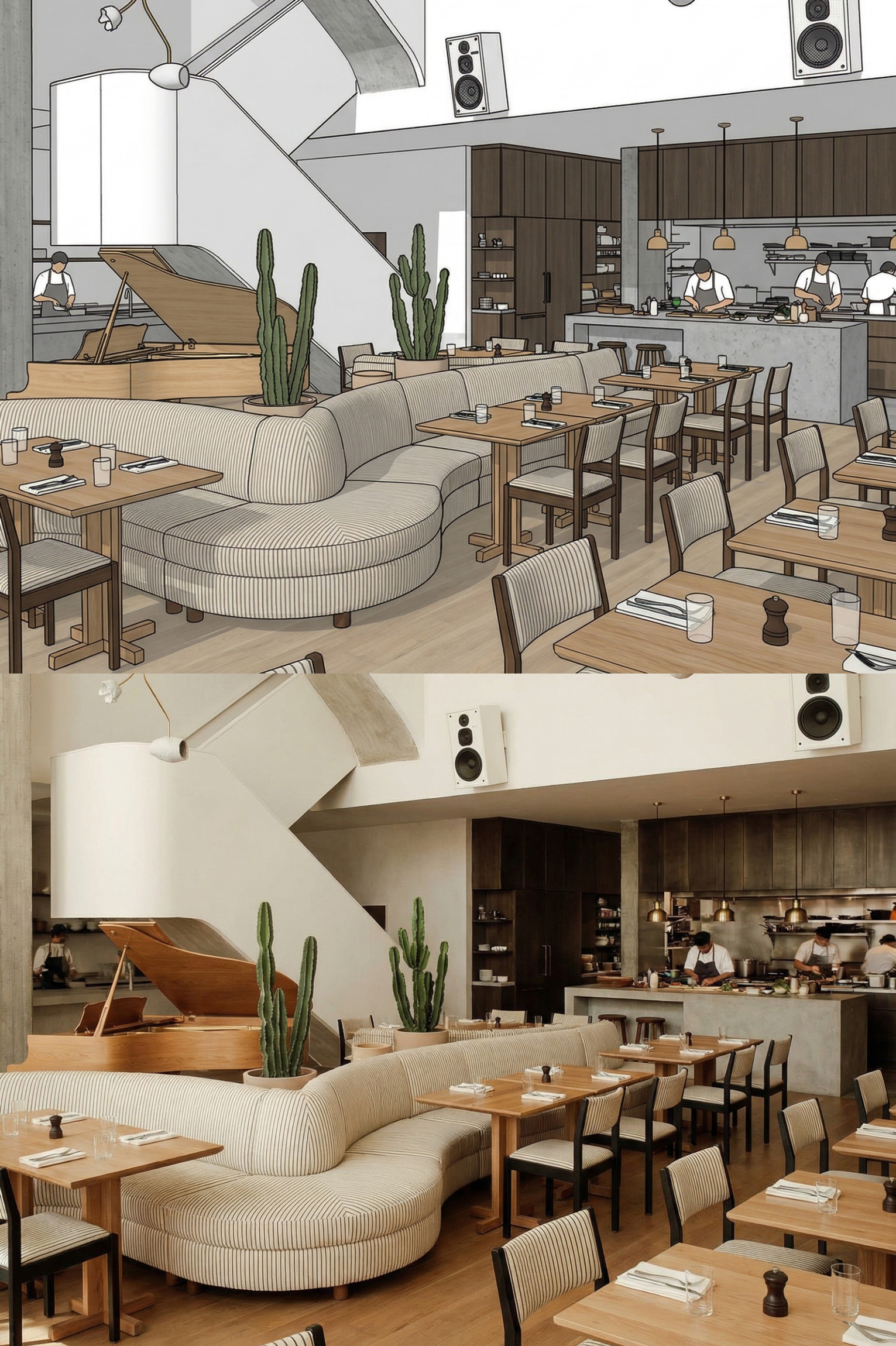
For a long time, photoreal rendering was the clearest line between a small studio and a large one.
Producing magazine-level images took a render farm and a junior willing to burn 10 hours on a single frame, on top of the annual cost of the software. Most practices spend somewhere between $5,000 and $30,000 a year keeping that capability in the building.
The designers who skip it to avoid the cost pay anyway, in proposals that look weaker beside a competitor who rendered, and approvals that come slower.
Until a few months ago, AI couldn't help with any of this on a real project. It would smear your materials and reinvent the composition you'd set up, so the output never looked like your design.
That changed recently.
The current models hold the geometry and the materials from a SketchUp screenshot, which is the only reason this works now and didn't a year ago.
Here is the part that matters more than the cost.
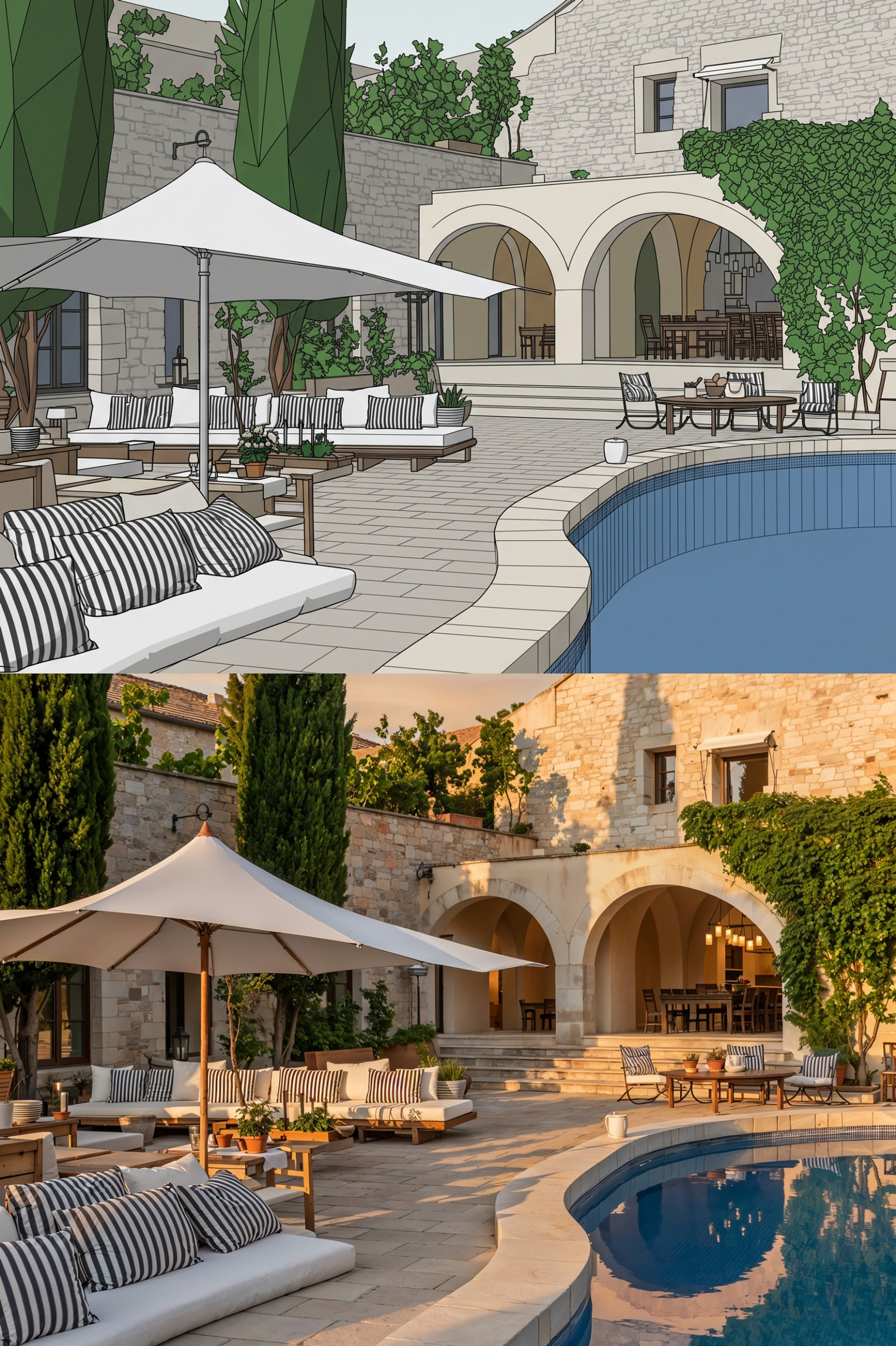
When a render takes 2 minutes instead of 2 days, it stops being the thing you hand over at the end. It becomes how you think while you're still deciding.
You swap a material and look at it straight away, or you kill a direction that isn't working before you've lost a day to it. You run a single room 30 times before you commit to anything. A designer who can see 30 versions makes a better final decision than one who could only afford to see one.
That is the real change, and it has little to do with saving money.
One thing stays exactly where it is. Your model is the source of truth for dimensions and construction. The AI handles visualization and client communication, and your construction documents still come from the model.
If you want to keep a render engine for the rare hero image, keep it. The daily client work is what moves.
The objection I hear most is that AI renders look like AI, and a render that betrays your taste is worse than none. That objection is correct, and it is the whole point.
The tools are nearly free and getting cheaper every month. What stays scarce is the eye that knows why one version reads as a real, photographed room and the other reads as a machine guessing.
When generation costs nothing, judgment becomes the thing people pay for. That gap is getting wider over time, which is good news if your taste is the part you trust.
The cost of rendering collapsed. Your taste didn't. That is the whole opportunity.
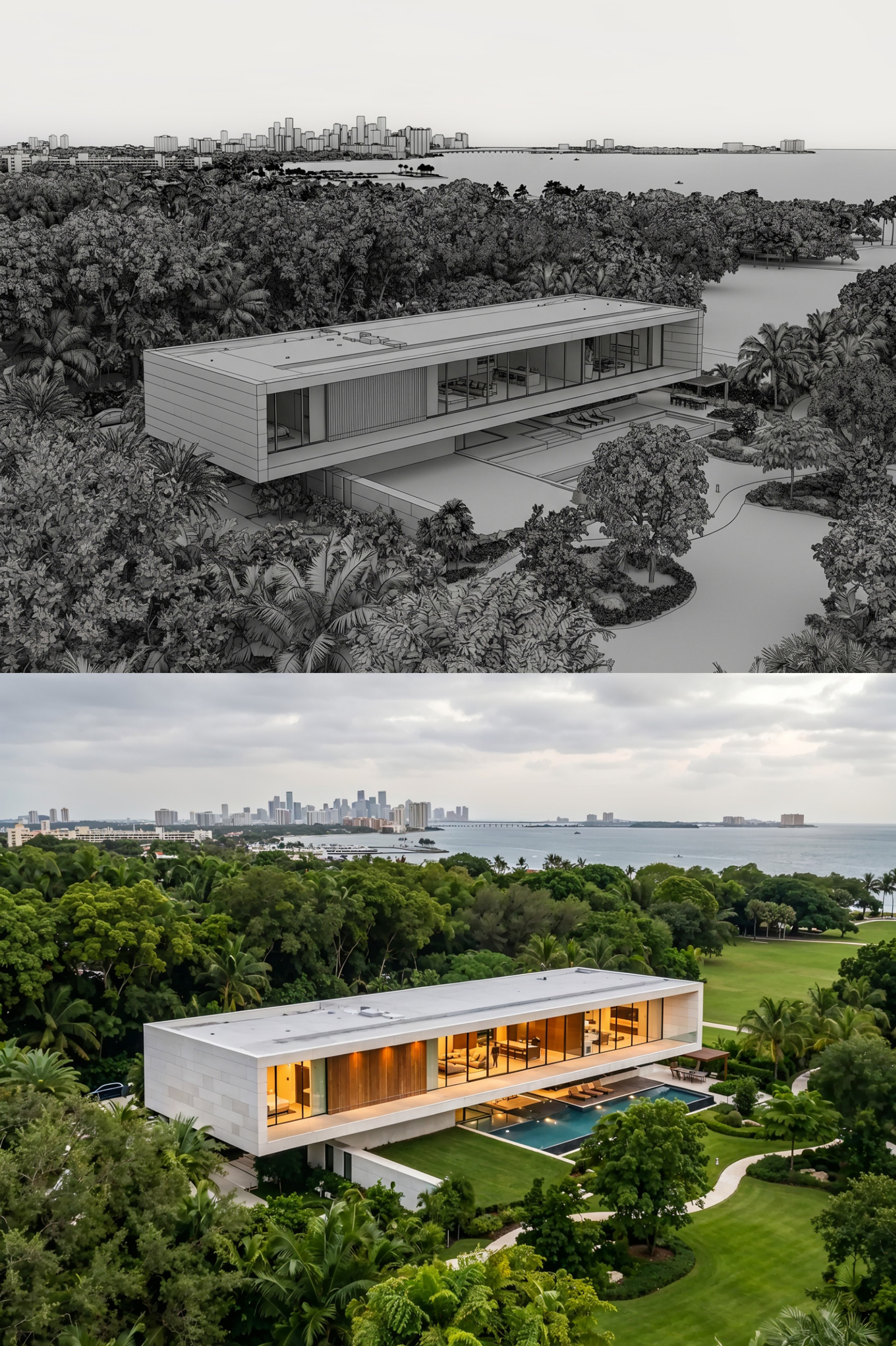
My masterclass is where I show the exact method for turning a sketch or a SketchUp screenshot into a magazine-level render, along with the wider AI workflow I run as a solo designer.
Whenever you're ready, there is a way I can help you:
1. My Masterclass AI for interior designers to learn how to create beautiful designs and grow an audience on social media.
I read everything on AI so you don't have to.
Join over +20k readers of 'AI for Designers' to receive prompts, strategies, and resources that will speed up your design workflow with AI.
I will never spam or sell your info. For any reason.
Author